 Tokyo Photoshoot
Kimono Rental in Tokyo: Real Prices, Shop by Shop
Kimono rental Tokyo prices start at about ¥2,000, and the shops advertising that number are telling the truth. What it leaves out is that the garment is the cheap part. Hair styling is an add-on at some shops and included at others; one chain takes a deposit and the rest do not; every shop in Asakusa wants the kimono back between 17:00 and 18:00 the same day; and the moment you want professional photographs of yourself wearing it, the price jumps to somewhere between ¥16,000 and ¥19,000. This page reads the actual plan pages of the main Tokyo shops, sets them beside the bookable kimono sessions in the catalogue, and says plainly which of the two you should be buying.
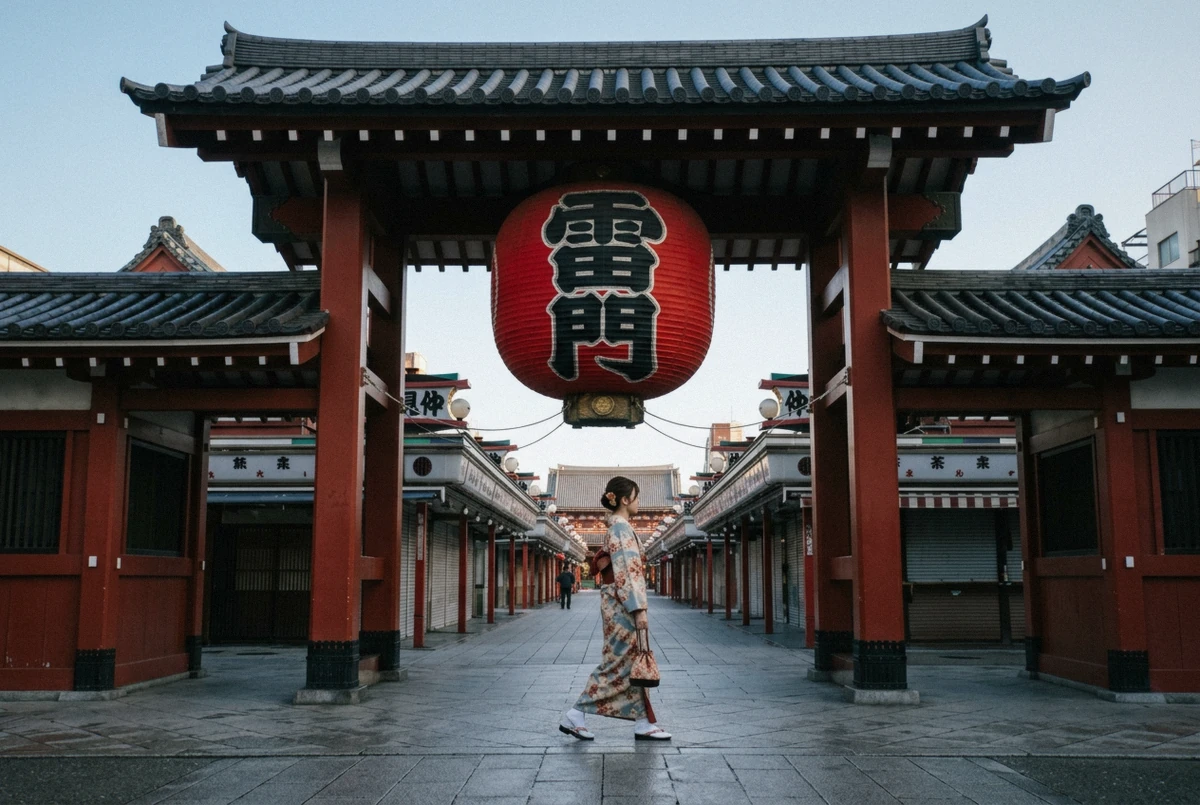
The frame every rental exists for: Kaminarimon before the crowds arrive.
Quick answer The short version: what you pay, what is included, and where the money actually goes
Expect ¥2,000 to ¥7,000 for a day in a rented kimono in Tokyo, with Asakusa the cheapest district and the widest choice. The variables that move the price are hair styling, whether the plan is a two-hour or a full-day rental, and how formal the garment is: a furisode is ¥10,000 to ¥48,000 depending on the shop. Photographs are the separate purchase. A rental shop's own photo package starts around ¥16,000, while the Asakusa kimono session in our catalogue bundles the rental with an optional one-hour shoot from $21, and the studio makeover does hair, makeup, costume and every image file for $223.
Key takeaways
- Entry prices read off the shops' own pages: ¥1,980 at Kimono Koto with an online discount, ¥2,500 at Kimono Ren with an advance booking, ¥2,560 for two hours at Hanaka, ¥3,300 at wargo Asakusa, ¥5,000 at Ann, ¥6,900 at YAE
- Hair is included at Ann, YAE and Hanaka; at wargo the ¥1,100 option is pre-ticked online and can be unchecked; Kimono Ren sells it as a ¥3,500 plan
- Everything goes back the same day: 17:00 at Koto, 17:30 at Kimono Ren and YAE, 18:00 at wargo and Aki. Next-day return is ¥1,000 at Kimono Ren and ¥2,000 per person at YAE
- Aki Kimono Rental takes a refundable ¥3,000 deposit before you walk out of the shop
- A rental shop's photo package starts at about ¥16,000, and a guided kimono session with an English-speaking photographer runs about ¥19,000 per person
What Every Tokyo Kimono Shop Actually Charges
Read off each shop's own plan page in August 2026. Prices are tax included where the shop states it. "Entry" is the cheapest women's plan, which is what the advertised number always refers to.
| Shop | Entry plan | Hair | Return | Next day |
|---|---|---|---|---|
| Kimono Koto, Asakusa | ¥1,980 with the online discount | Included, with a hairpin | 17:00 | Not published |
| Kimono Ren, Asakusa | ¥2,500 booked ahead | ¥3,500 plan includes it | Shop closes 17:30 | ¥1,000 |
| Hanaka Kimono, Asakusa | ¥2,560 for two hours | Included | Not published | Not published |
| wargo, Asakusa | ¥3,300 to ¥4,400 | ¥1,100 option, pre-ticked online | 18:00 | Not published |
| Kimono Rental Ann, Asakusa | ¥5,000 traditional, ¥7,000 lace | Included, 20 to 25 minutes | Not published | Not published |
| YAE, Asakusa | ¥6,900 women, ¥6,600 men | Included in every package | Shop closes 17:30 | ¥2,000 per person |
| Aki Kimono Rental, Shibuya and Ginza | ¥6,600 for the day | ¥3,300 add-on | 18:00 | Extra fee, unspecified |
| Sakaeya, Harajuku, by appointment | ¥10,000 with a tea ceremony | Included in the plan | Not published | Not published |
Why the same city has a ¥1,980 plan and a ¥48,000 one
Three things move the number, and only one of them is quality. The first is the garment class: a komon or a summer yukata is the entry plan everywhere, a retro or lace kimono is roughly ¥8,000, a houmongi ¥25,000, and a furisode ¥10,000 at Ann, ¥30,000 at YAE, ¥48,000 for their high-end version. The second is the length of the rental, which is why Hanaka's two-hour plan reads cheaper than a full-day plan that is actually better value.
The third is what the shop has decided to bundle: hair styling is inside the price at Ann, YAE, Koto and Hanaka, and outside it at wargo and Aki, which is the single most common reason a booking comes out ¥1,100 to ¥3,300 above the advertised figure.
Which Route Is Yours?
If you want the experience and a few phone photographs
rent from a ¥2,000 to ¥3,300 shop in Asakusa, book ahead for the discount, and go in the morning
If you want good photographs of yourself in the kimono
book the photographer first: the Asakusa kimono walk bundles both, and its upper tiers include the hour outright
If you want hair, makeup and a costume you cannot rent in town
the studio makeover does all of it indoors in two and a half hours and hands over every file
If you want the evening light
pay the next-day return fee, ¥1,000 at Kimono Ren or ¥2,000 per person at YAE, rather than racing a 17:30 deadline
What Is Actually In the Bag
Every entry plan in Tokyo covers the same basic kit, and it is more than most visitors expect. wargo's Asakusa standard plan lists it item by item: kimono, obi, undergarment, long undergarment, zori sandals, bag, tabi socks and a hairpin. Kimono Ren says the same in three words, all included, and adds that there is no separate charge for socks. What you bring is yourself and, at most shops, your own makeup.
The time cost nobody advertises
Dressing is not quick. wargo's own plan page says selecting a kimono and completing the dressing takes 45 to 90 minutes, and Ann puts its hair arrangement at 20 to 25 minutes on top. Add the walk to wherever you are photographing and the practical shape of the day is: arrive mid-morning, be out in the street by noon, and be back at the shop by five. That is also exactly why the Asakusa kimono session in our catalogue insists its booking time is the studio check-in rather than the start of the shoot, with about two hours of dressing and hair before any photograph is taken.
If you want the full day rather than the middle of it, the two next-day options are the honest fix: ¥1,000 at Kimono Ren, ¥2,000 per person at YAE, which lets you keep the kimono until 17:30 the following day and shoot in the evening light instead of the harsh middle of the afternoon.
Deposits, sizes and the things that catch people out
Aki Kimono Rental takes a refundable ¥3,000 deposit before you leave the shop, which no other shop on this page mentions. Kimono Koto's furisode plan needs five days' notice, so it is not a walk-in. And sizing is real: the operator behind our own kimono session states that adult kimono may not fit well under about 150 cm, and that choice narrows for women above roughly 175 cm or a 100 cm waist and men above 185 cm or a 125 cm waist.
Shops that describe themselves as plus-size friendly exist, and searching for that term specifically is more productive than hoping.
The Photographs Cost More Than the Kimono
This is the part the price comparisons miss. Renting the garment is cheap; being photographed properly in it is not, and the two purchases are made in completely different places.
A rental shop's own photo service is a premium product. YAE sells timed photoshoot packages in 30, 60 and 90-minute blocks starting from ¥16,000, on top of the ¥6,900 rental. A bookable kimono experience that combines the rental, a local guide and an English-speaking photographer around Sensō-ji and Nakamise runs about 2.5 hours at ¥19,000 per person. Kimono Rental Ann offers two photo tiers instead, a natural package with no editing and same-day delivery, and a retouched package delivered in 10 to 15 days; it publishes no price for either, which tells you it is quoted per booking.
Where the catalogue sits against those numbers
Two of the sessions we compare are kimono products, and they bracket the rental shops from both sides.
The Asakusa kimono walk starts at $21, which is the same class of price as a wargo or Kimono Ren rental, because at that tier it is a rental: dressing, hair if your hair is long enough, obi, bag, geta and new tabi socks, with the one-hour private photoshoot as an option you tick at checkout. Its two upper options include the shoot outright, and its retouched photographs are allocated per booking rather than per person, which matters for a family.
The studio makeover is the other end at $223 for two and a half hours: professional hair and makeup, oiran-grade costumes the studio says are not rentable in town, a private studio rather than a public street, and every image file handed over. Against a ¥6,900 rental plus a ¥16,000 photo package, that is not the expensive option; it is the same money for a different product.
| Route to a photograph | What you pay | What comes back |
|---|---|---|
| Rental only, phone photographs | ¥1,980 to ¥6,900 | Whatever you and your friends shoot |
| Rental plus the shop's photo add-on | ¥3,300 on top at Aki | A short shoot, quality unstated |
| Rental shop's timed photo package | from ¥16,000 on top of the rental | 30, 60 or 90 minutes with their photographer |
| Guided kimono experience with a photographer | about ¥19,000 per person | 2.5 hours around Sensō-ji and Nakamise |
| Asakusa kimono walk in this catalogue | from $21, shoot as a checkout add-on | Originals plus a retouched selection per booking |
| Studio makeover in this catalogue | $223 for 2.5 hours | Hair, makeup, oiran costume, every image file |
When a rental shop's photo add-on is the right call
If the photographs are a souvenir rather than the point, the shop's own service is simpler and you are already standing there. Aki's ¥3,300 photo add-on is the cheapest way to leave with something better than phone snapshots. If instead the photographs are the reason for the day, book the photographer first and the garment second, because the photographer's calendar is the scarce resource and the Tokyo photoshoot catalogue shows how few of them shoot in Asakusa at all.
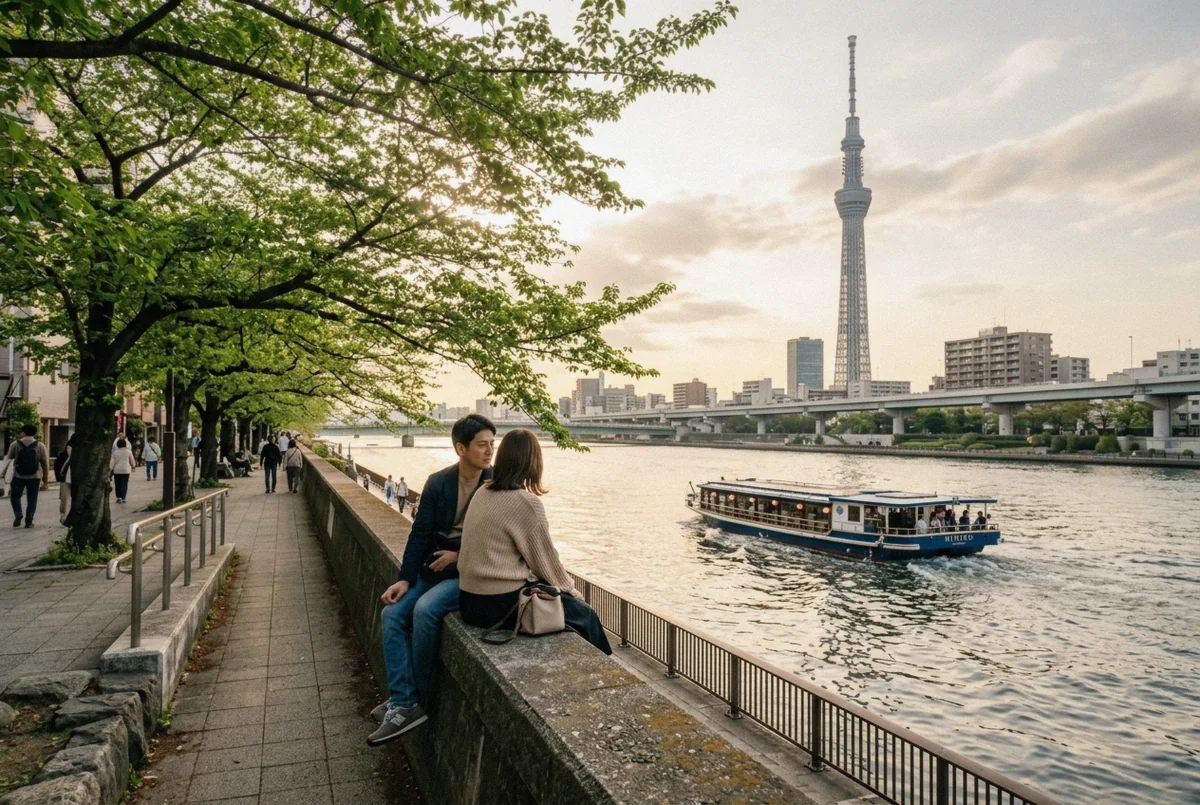
Five minutes from the rental shops, and empty compared with the temple approach.
Where to Wear It, and Where Not To
Asakusa is where the shops are and where a rented kimono looks least like a costume: the temple approach, the side streets, the riverside at Sumida Park five minutes east. Nakamise before the shutters go up is the single best frame in the district, which is an argument for a morning rental rather than an afternoon one.
Two rules a rented kimono runs into
Shinjuku Gyoen prohibits commercial photography inside the garden, caps a group at ten people including models, and bans tripods and reflectors during cherry blossom season. That does not stop you visiting in a kimono; it stops a paid photographer working there. And a Tokyo portrait studio warns that arriving in full bridal costume significantly limits the locations available, because several gardens restrict staged photography in formal dress. Rented kimono is welcome nearly everywhere; a wedding outfit is not.
The practical geography is on the photo spots map, which lists which Asakusa locations the bookable sessions actually use and which ones you are on your own for.
Walking in geta for a day
The sandals are the reason people return early. Geta and zori are worn with tabi socks and no arch support, and Asakusa's paving is uneven. Two practical moves: pick the shop closest to where you intend to walk, since the difference between one minute from Sensō-ji at Ann and a three-minute walk at Kimono Ren is real when your feet hurt, and accept that a rickshaw pairing, which YAE and others sell, exists precisely because walking all day in kimono is harder than it looks.
Kimono Rental in Tokyo: Questions People Ask
How much does it cost to rent a kimono in Tokyo?
Between about ¥2,000 and ¥7,000 for a standard women's plan, read off the shops' own pages in August 2026: ¥1,980 at Kimono Koto with the online discount, ¥2,500 at Kimono Ren booked ahead, ¥2,560 for two hours at Hanaka, ¥3,300 to ¥4,400 at wargo Asakusa, ¥5,000 at Ann and ¥6,900 at YAE. Formal garments are a separate tier: furisode runs ¥10,000 to ¥48,000. The full table has each shop's hair policy and return deadline beside the price.
How much does kimono rental usually cost with a photoshoot?
Far more than the rental. A rental shop's own timed photoshoot package starts around ¥16,000 on top of the garment, and a guided kimono experience with an English-speaking photographer around Sensō-ji is about ¥19,000 per person. The bookable alternatives sit either side: the Asakusa kimono walk from $21 with the shoot as an add-on, and the studio makeover at $223 with hair, makeup and every file included.
Is it worth renting a kimono in Japan?
For a day in Asakusa, yes, and the price is not the argument against it. The two things that decide whether people enjoy it are the shoes and the clock: geta with tabi socks over uneven paving is tiring, and every shop wants the garment back between 17:00 and 18:00. Both are solvable. Rent in the morning, or pay the next-day fee of ¥1,000 to ¥2,000 and keep the evening light.
Can a foreigner wear a kimono in Japan?
Yes. The rental industry in Asakusa exists largely for visitors, shops advertise in English, and wearing one to a temple or a festival is read as participation rather than appropriation. What people do notice is the fit and the wrap: the left side always crosses over the right, which the shop staff handle when they dress you, and that is one reason having a shop dress you beats buying a kimono online and improvising.
Do you need to book a kimono rental in advance?
Not usually, but the discounts require it. Kimono Ren's ¥2,500 price is an advance-booking rate, Kimono Koto's ¥1,980 is an online reservation discount, and its furisode plan needs five days' notice. Aki asks for two days if you want a fixed time rather than taking your chances as a walk-in. In cherry blossom week, book everything.
What time do you have to return a rented kimono?
The same day, and earlier than most people expect: 17:00 at Kimono Koto, 17:30 at Kimono Ren and YAE, 18:00 at wargo and Aki. Next-day return costs ¥1,000 at Kimono Ren and ¥2,000 per person at YAE, which lets you keep it until 17:30 the following day. If your plan is evening photographs, that fee is the whole point.
Where should you go in a rented kimono?
Asakusa first: Kaminarimon, the Nakamise approach before the shutters open, the temple courtyard and the Sumida riverside. After that, Yanaka's old streets and Nezu Shrine's torii tunnel photograph well and are quiet. The photo spots map has the full list with the best hour for each, and which sessions shoot there.
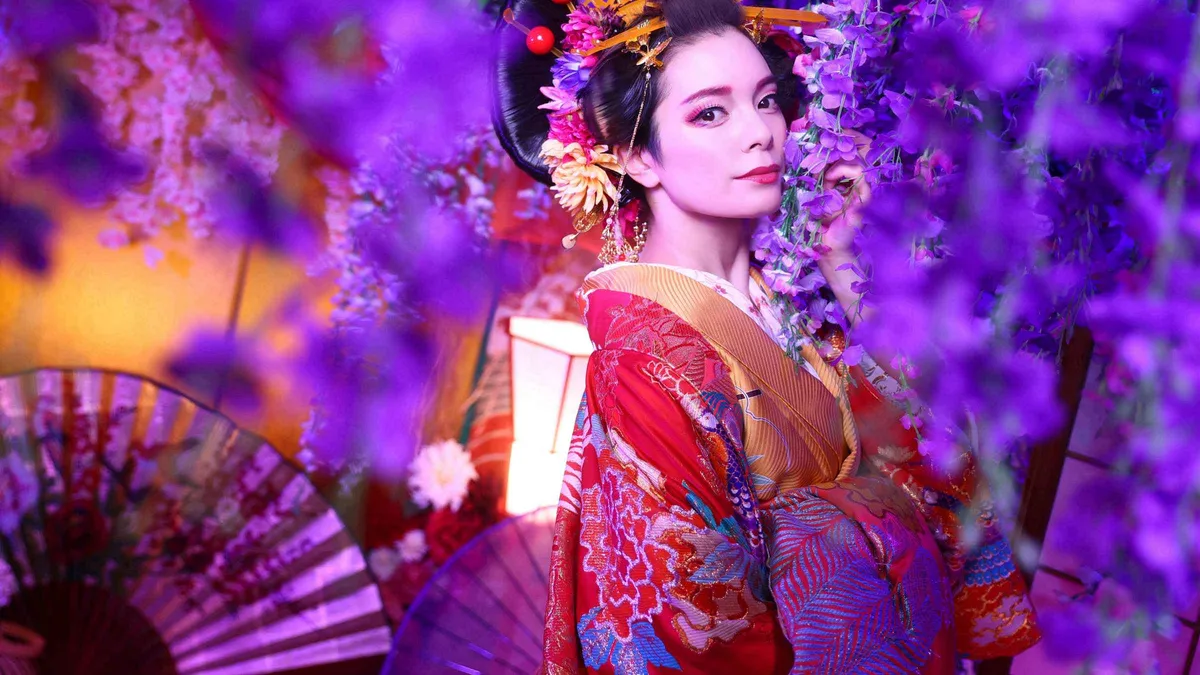
The studio route: hair, makeup and costume handled in one booking.