Tokyo PhotoshootAn Independent Guide Check Availability

Tokyo Photoshoot: Compare 14 Private Sessions, Prices and Districts

The cheapest Tokyo photoshoot on the booking platform costs $21 and includes no photographer: it is a kimono rental where the shoot is an add-on. This page separates the fourteen sessions by what they actually hand you, minutes in front of a lens, edited photographs, and the days you wait for them.

Updated August 2026

  • Rated 4.7–5.0 where the listings carry reviews
  • Private sessions on ten of fourteen listings
  • Free cancellation 24h on every listing
  • Listings checked: August 2026
Quick answer The short version — what you pay, what comes back, and where you may not point a camera

A photographer who shoots you in Tokyo starts at $35 for an hour in Shinjuku after midnight and runs to $233 for a cinematic session priced per couple — against the $325 concierge services charge here for thirty minutes. Below both sits Asakusa kimono from $21, where the price buys the garment and the shoot is a separate line at checkout. The districts split cleanly: Shibuya and Shinjuku sell neon after dark, Asakusa sells temple daylight, and the spot guide says which session shoots where — including two alleys that ban photography without the landlord's permission.

Key takeaways

Compare Tokyo Photoshoot Sessions

Every session below is booked through the booking platform, which takes the payment and handles changes and cancellations; prices and ratings were last read from the listings in August 2026. Filter by the frame you came for. Nothing here fits? Browse every Tokyo photoshoot listing — new photographers appear through the year.

What Travellers Say After Their Tokyo Photoshoot

★★★★★ ★★★★★
Arisa was amazing and soooo friendly! I was really nervous because it was my first time doing something like this but she made me feel so comfortable and it was so natural, just like hanging out with an old friend.
Tris · United States · August 2026
★★★★★ ★★★★★
She gave me direction when I needed it, while still letting everything feel natural. I absolutely love how the photos turned out and how beautifully she captured both me and the atmosphere of Tokyo.
Faylum · Turkey · August 2026
★★★★★ ★★★★★
Tommy arrived early and was totally ready to shoot. Despite the rain he powered through and showed me some of the best spots in Shinjuku. He had a plan and plenty of equipment.
Ian · United States · August 2026
★★★★★ ★★★★★
They arrived on time and started working right away — we walked to major parts of Shinjuku taking pictures. They were extremely professional and friendly.
jonathan · United States · July 2026
★★★★★ ★★★★★
The two ladies who run the photo shoot are so nice. They did my hair, makeup, outfit, and all the pictures. I have never done a photo shoot before and they made it so easy!
Reagan · United States · July 2026
★★★★★ ★★★★★
It was pouring with rain, but that didn't stop him from taking beautiful photos. It was my first photoshoot, but Jun gives you such a confidence boost that you feel like the streets of Japan belong to you.
Francesca · Germany · August 2026

Verified reviews for the sessions on this page, quoted in excerpt with their original dates. Full reviews sit on each listing.

Where Tokyo Photoshoots Actually Happen

Three districts carry almost every session on this page, and they are three different cities. Shibuya is a crossing and the streets that feed it. Shinjuku is signage stacked over narrow lanes — two of them privately owned and closed to unpermitted cameras. Asakusa is a temple approach that empties before eight in the morning and jams by ten. Here is what each spot gives you, which session shoots it, and the rule attached where there is one.

Crowds crossing the Shibuya Scramble at blue hour, the best-known backdrop for a Tokyo photoshoot Blue hour, and again after 22:00

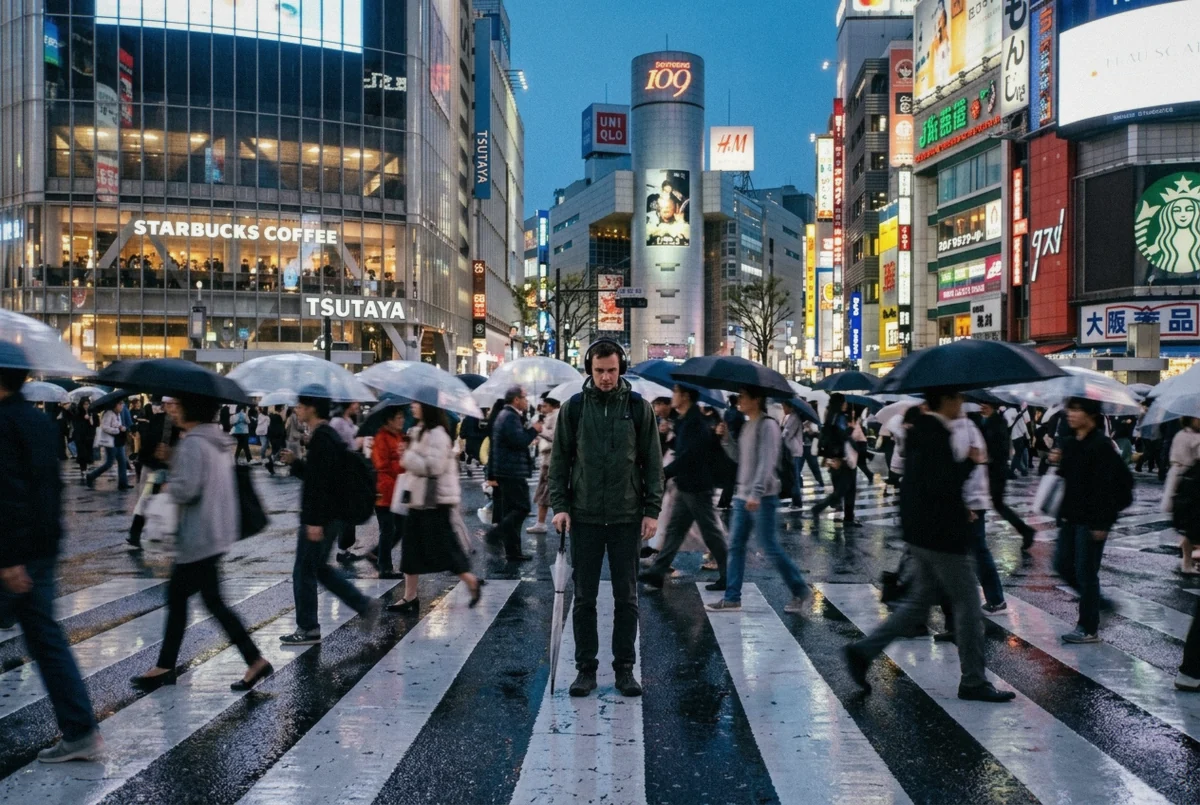
Shibuya Scramble Crossing

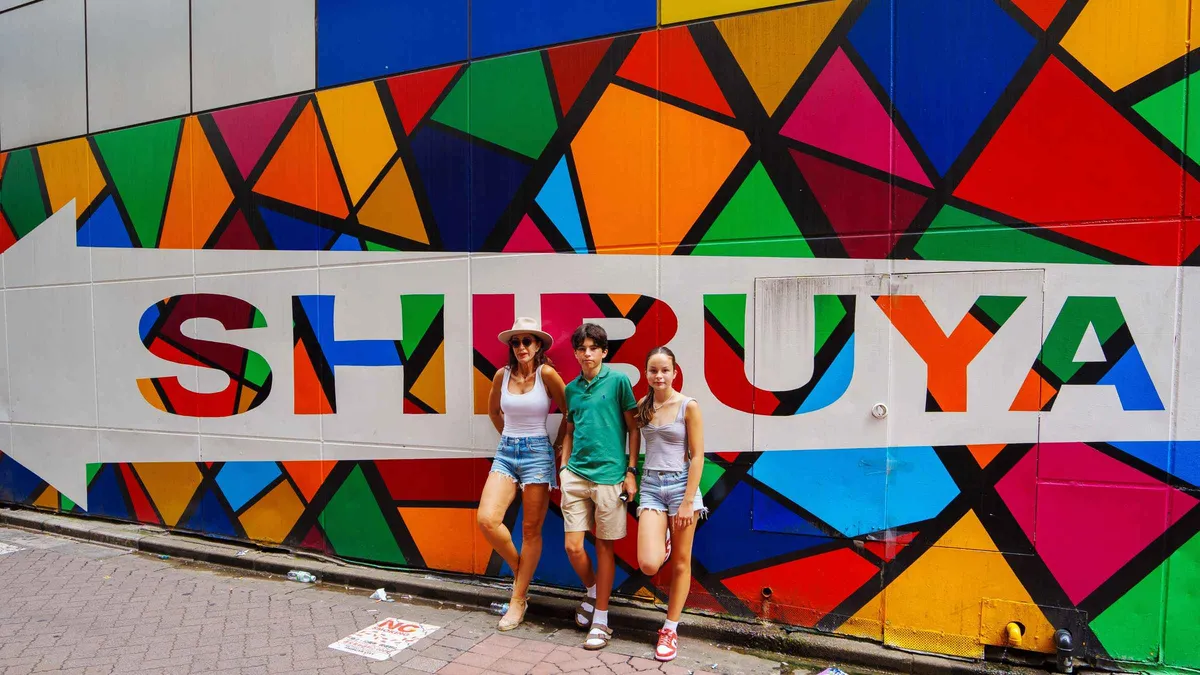
The frame everyone arrives with: several hundred people moving in every direction under screens the size of buildings. It photographs best when the sky still holds blue and the screens are already lit. The 15-to-45-minute session does nothing else, the Shibuya neon tour stops here for fifteen minutes inside a longer walk, and the photography workshop meets at the Hachiko statue a minute away.

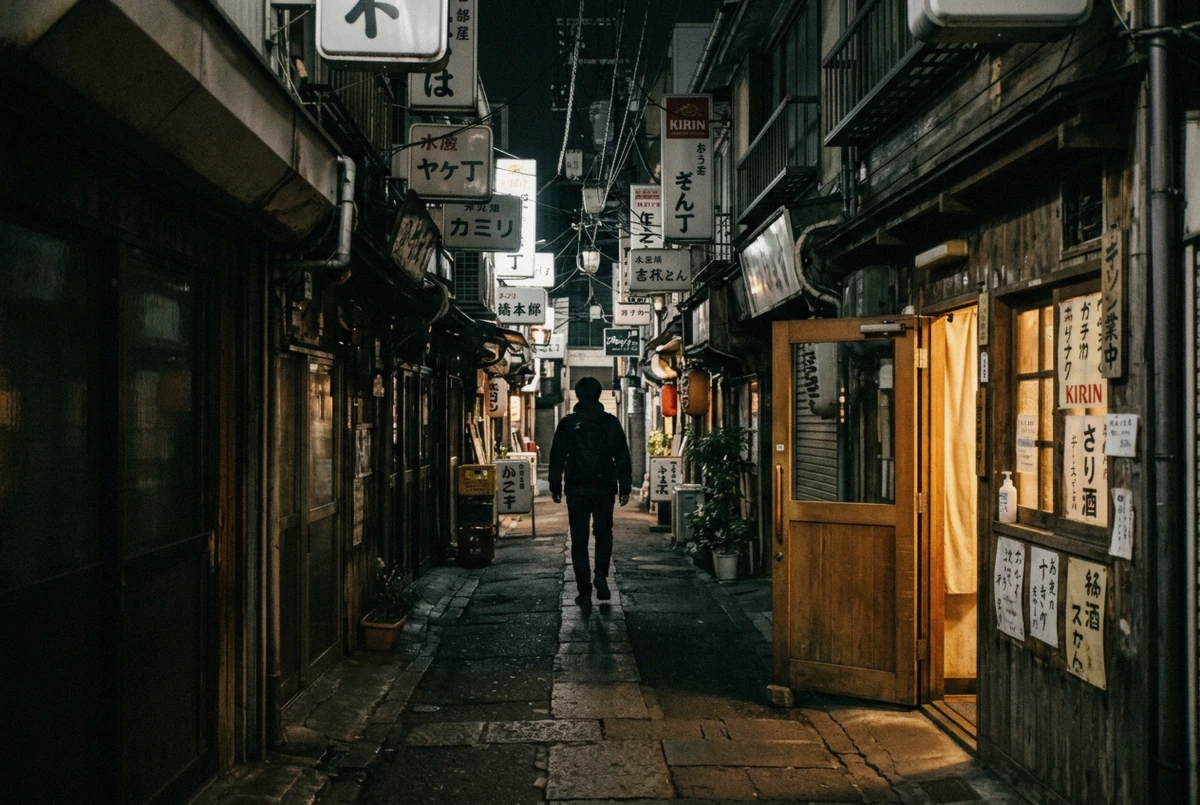
Neon signage along the main Kabukicho street in Shinjuku during a night Tokyo photoshoot After dark, later is quieter

Kabukicho & the Godzilla Head

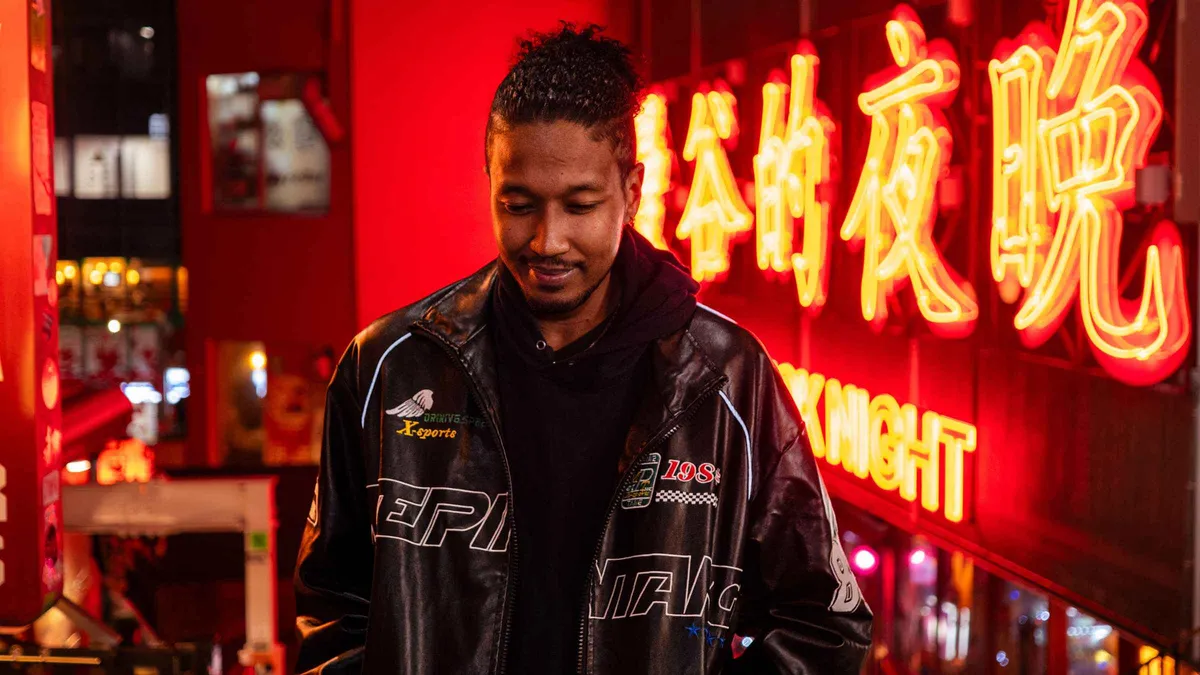
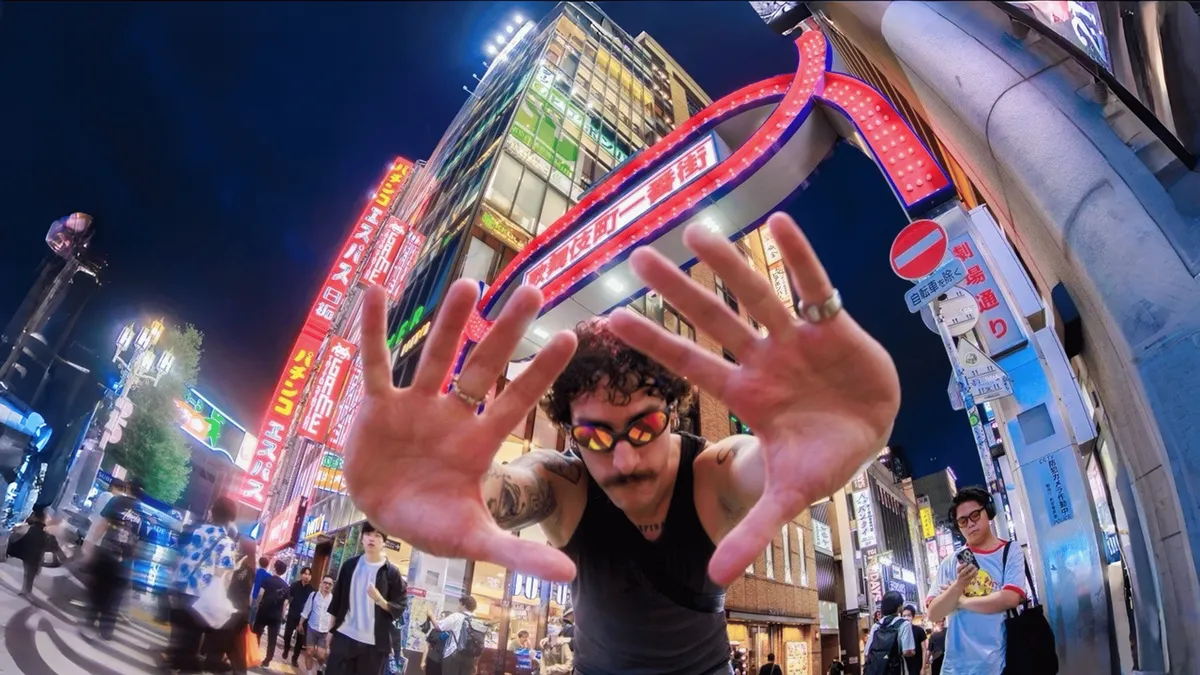
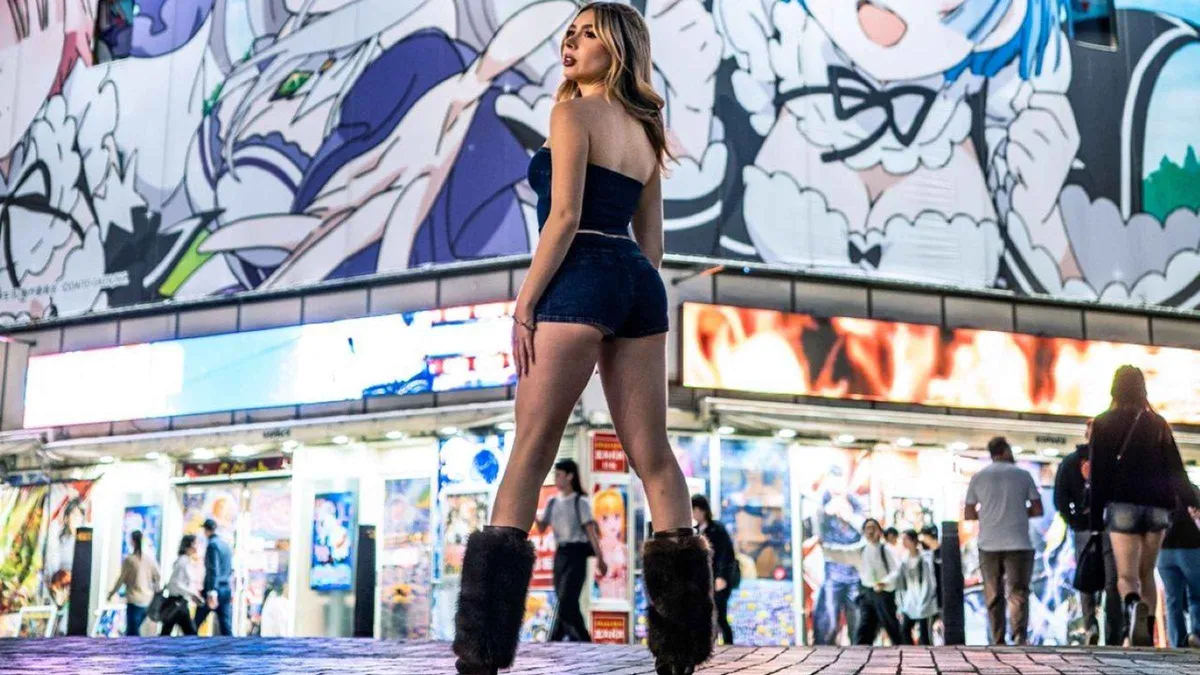
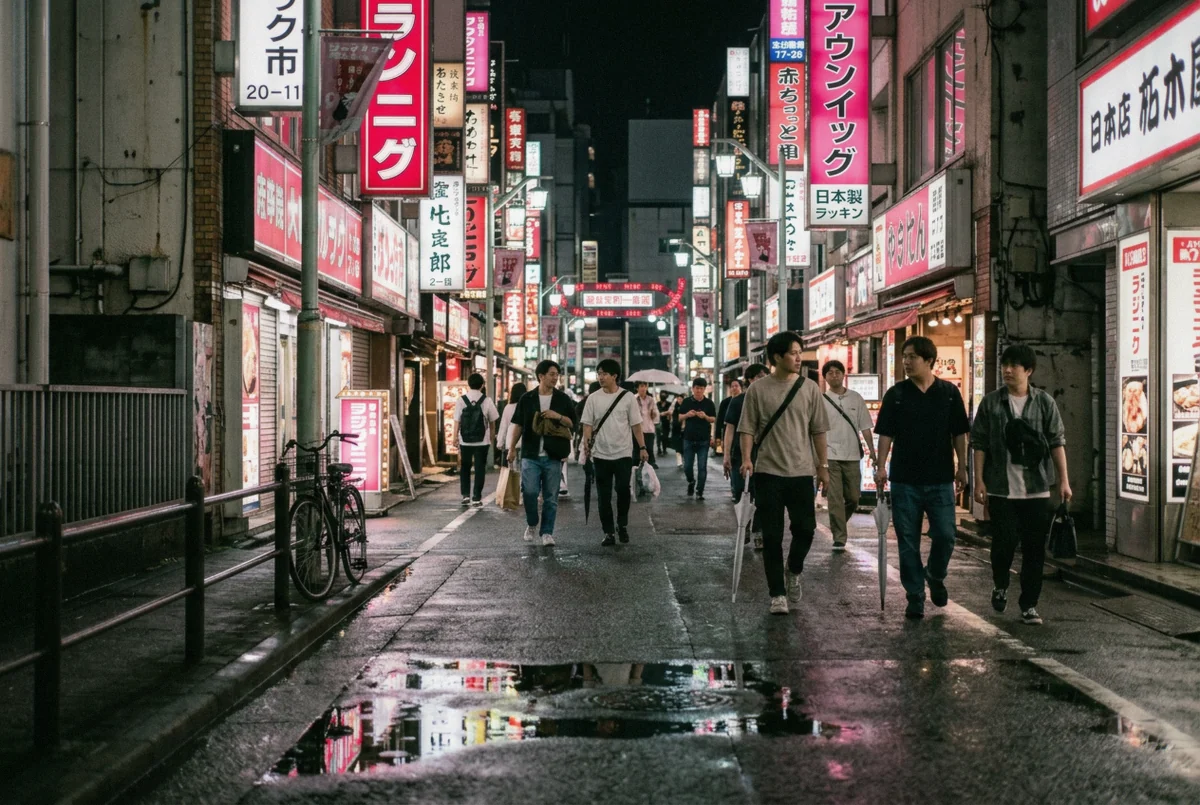
Shinjuku's nightlife grid: the red Ichibangai gate, signage stacked eight floors up, and the Godzilla head looking down from the Hotel Gracery. Wet asphalt doubles all of it, which is why two photographers here sell rain as a feature. The Kabukicho neon hour ends at the Godzilla head; the cyberpunk session works the backstreets off the main strip.

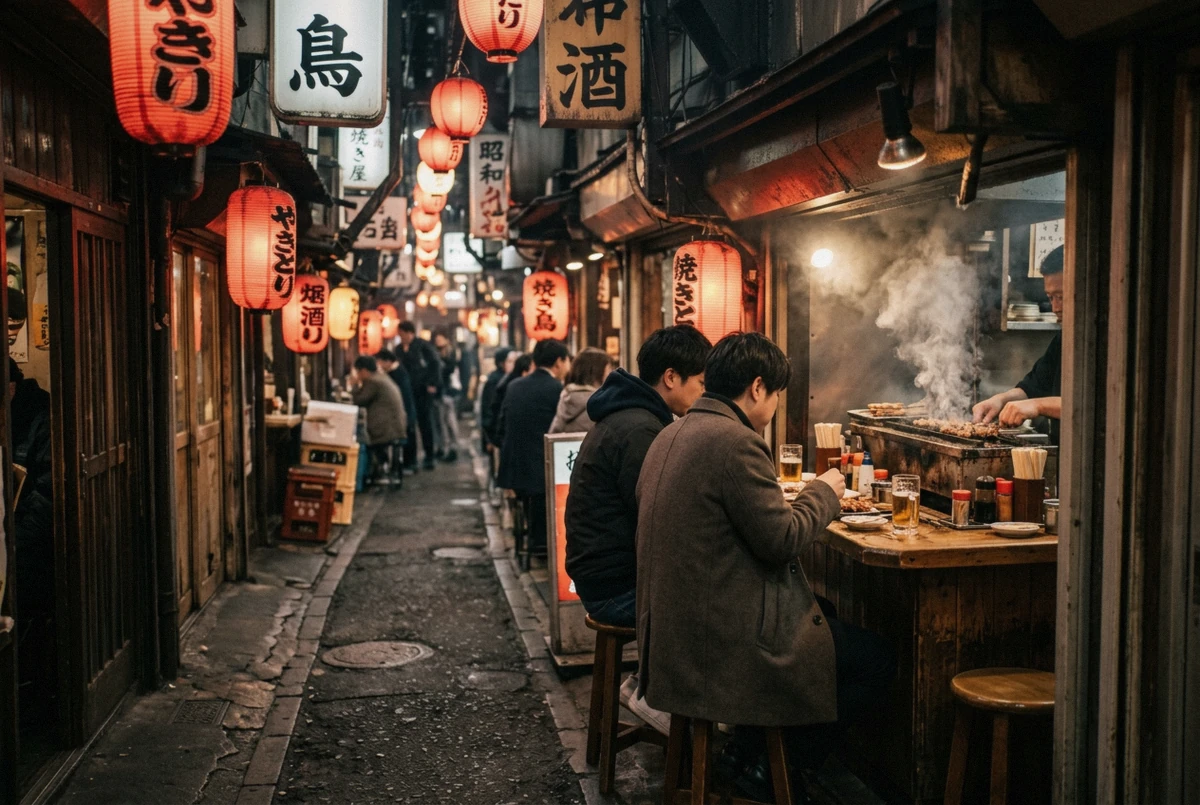
Lantern-lit yakitori alley in Shinjuku photographed on an evening Tokyo photoshoot From sunset, when the lanterns come on

Omoide Yokocho

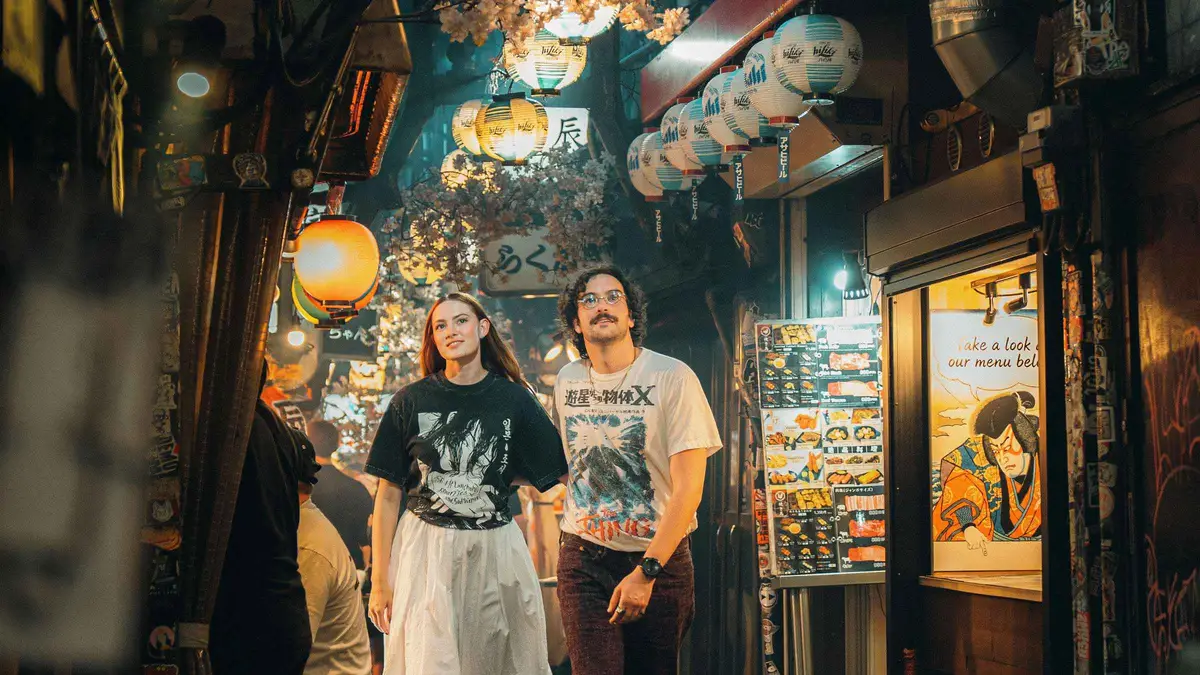
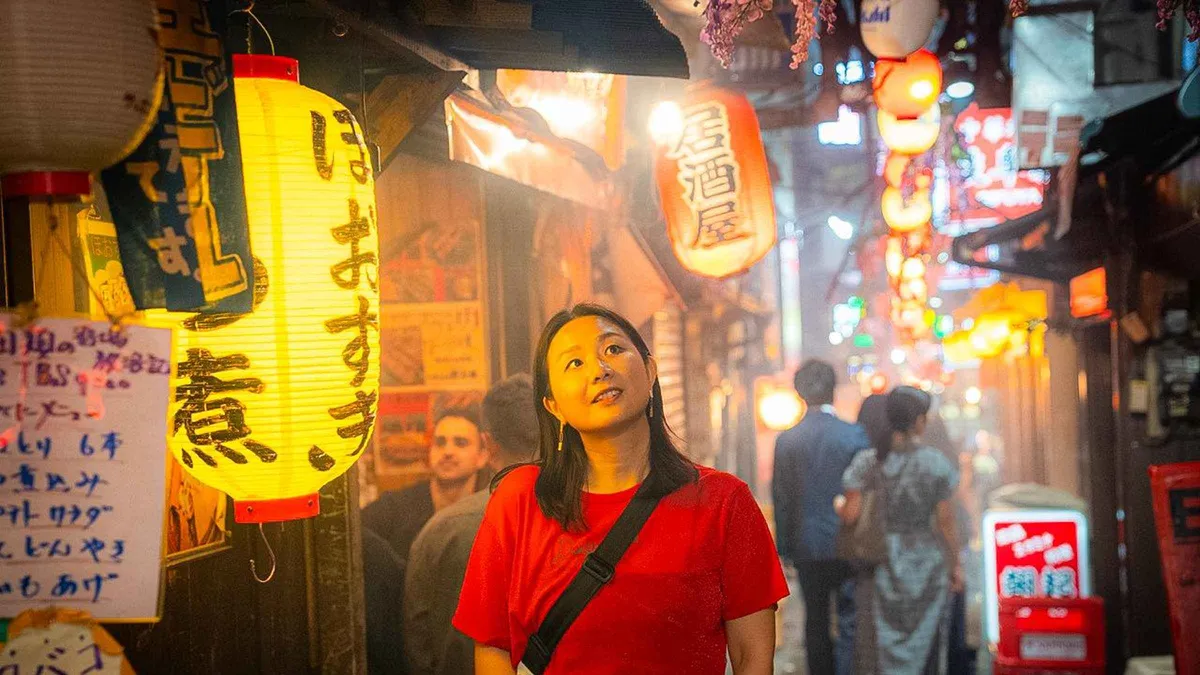
A post-war lane of tiny yakitori counters beside Shinjuku Station, grill smoke hanging in the lantern light. It is also private property: the alley's management prohibits all photography and video without prior permission, and approved shoots wear a shooting-approved armband with a staff chaperone. Both the cyberpunk session and the Instax session list it as a stop — ask how they handle it.

Hand-painted signs above the tiny bars of Golden Gai in Shinjuku at night on a Tokyo photoshoot route Late evening

Golden Gai

Six lanes of roughly two hundred bars the size of a living room, hand-painted signs stacked above each door. No-photo signs are posted throughout: photography needs the approval of the district's business promotion association, because the people drinking here come for the discretion. Only the Night Premium option of the cyberpunk session includes it.

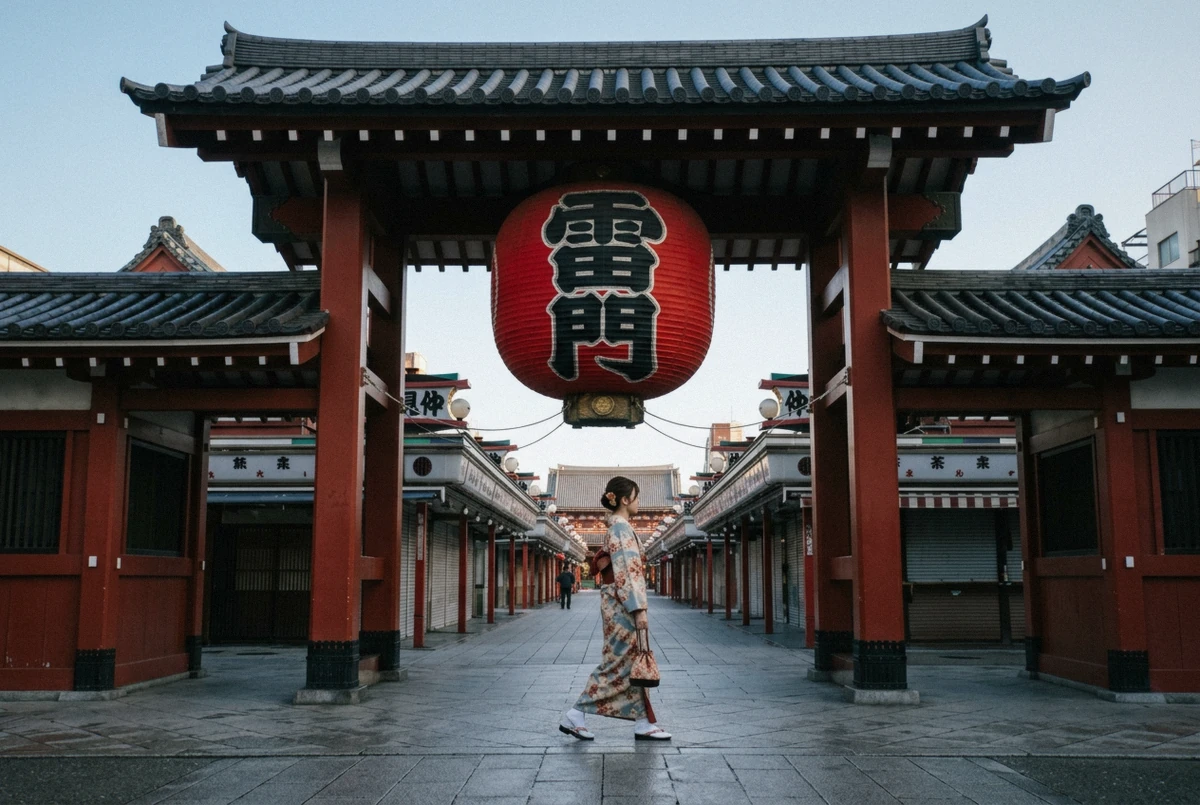
Kaminarimon gate and its giant lantern in early morning light during an Asakusa Tokyo photoshoot Before 08:00 on a weekday

Sensō-ji & Nakamise

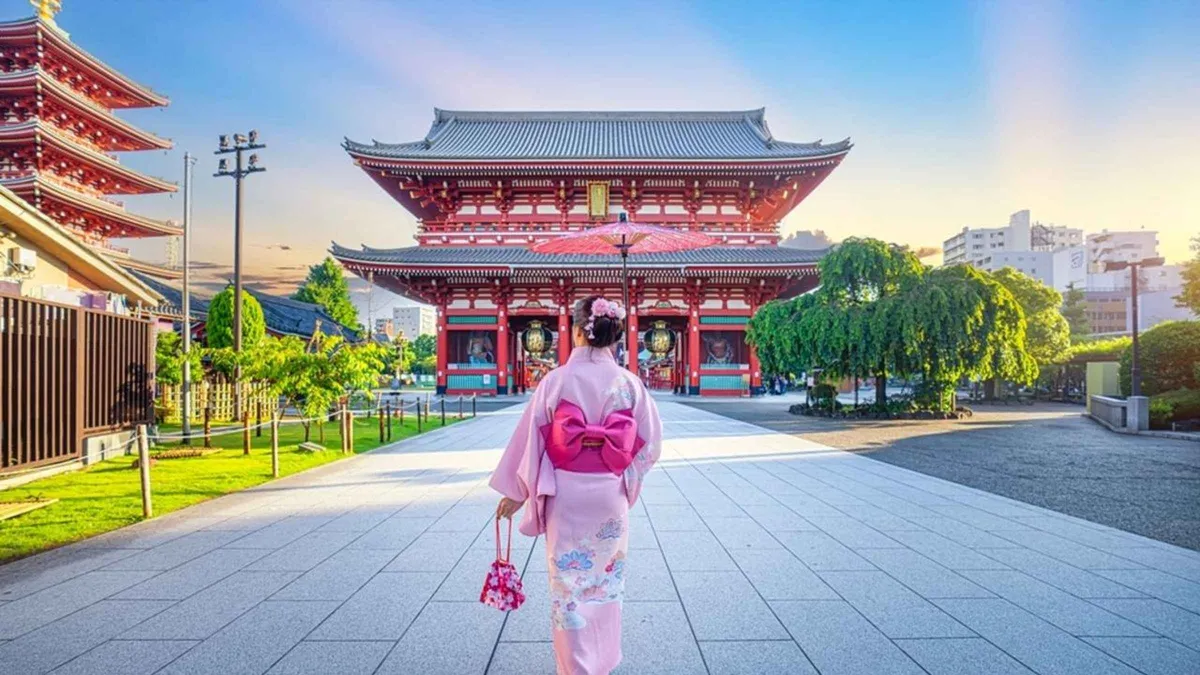
Tokyo's oldest temple, its giant lantern and the shopping street that runs to it. Before eight the light is soft and the approach is nearly empty; after ten it becomes crowd management, which is why one operator routes deliberately around it. The Asakusa temple session shoots the gate and Nakamise, and the kimono walk gives you twenty minutes at each of Kaminarimon, the temple and the side streets.

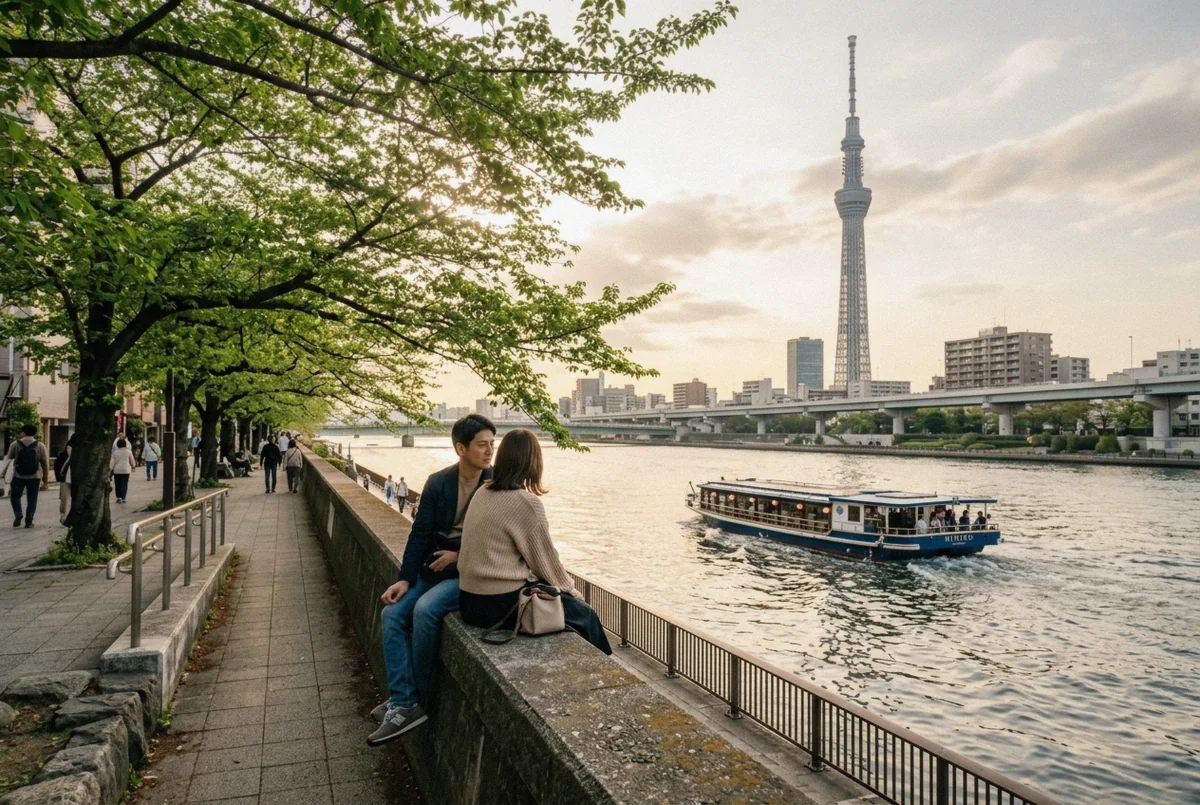
Sumida River walkway with the Tokyo Skytree behind it, a riverside stop on an Asakusa Tokyo photoshoot Late afternoon into sunset

Sumida Park & the Riverside

Five minutes from the temple crowds: an open embankment with the Skytree standing across the water, cherry trees along the path and boats passing. It is the contrast shot — modern tower behind a traditional district — and it only appears on the longer packages of the Asakusa session, which adds it once you book sixty minutes or more.

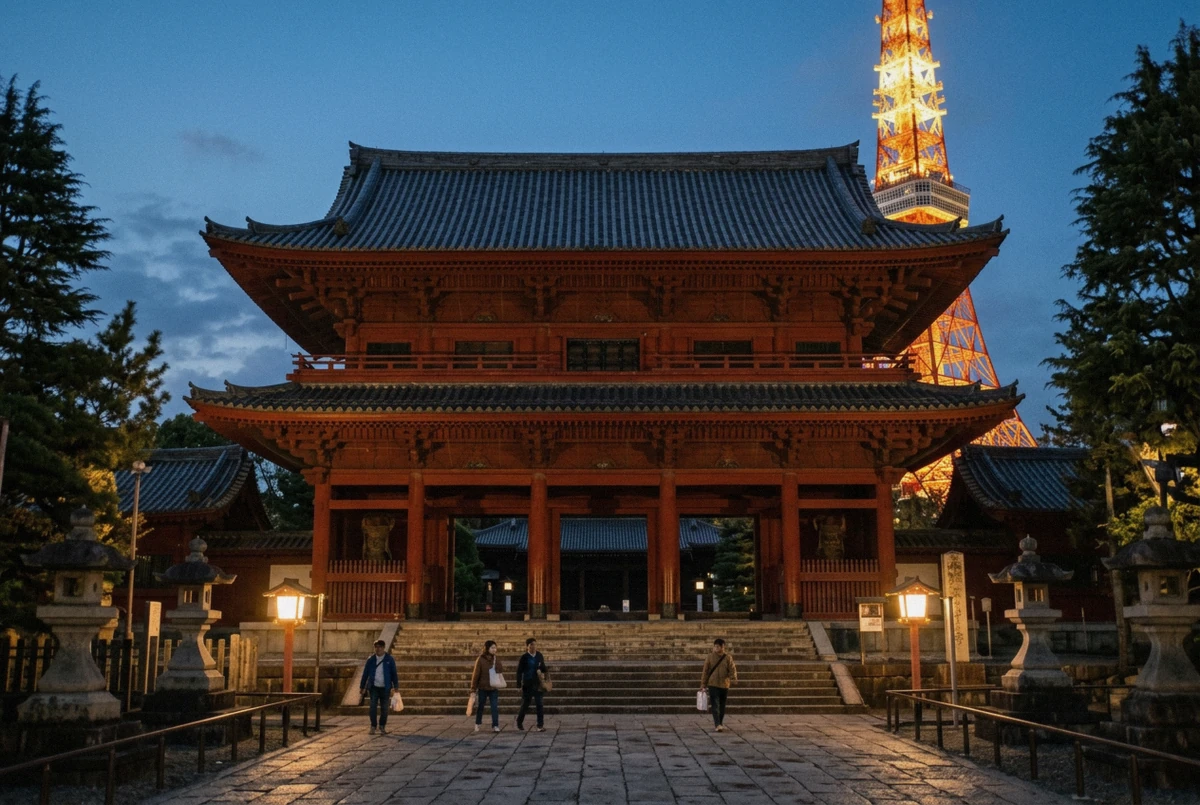
Tokyo Tower rising behind the vermilion gate of Zōjō-ji temple, a classic Tokyo photoshoot location Blue hour, or the hour before it

Tokyo Tower and Zōjō-ji

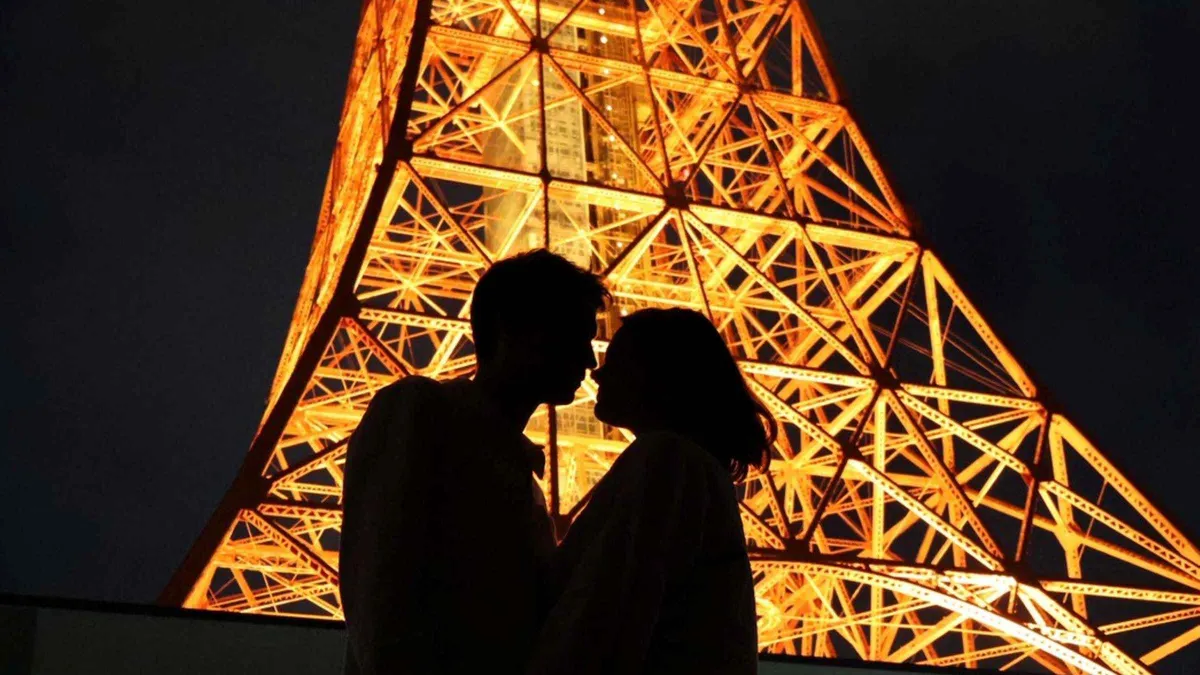
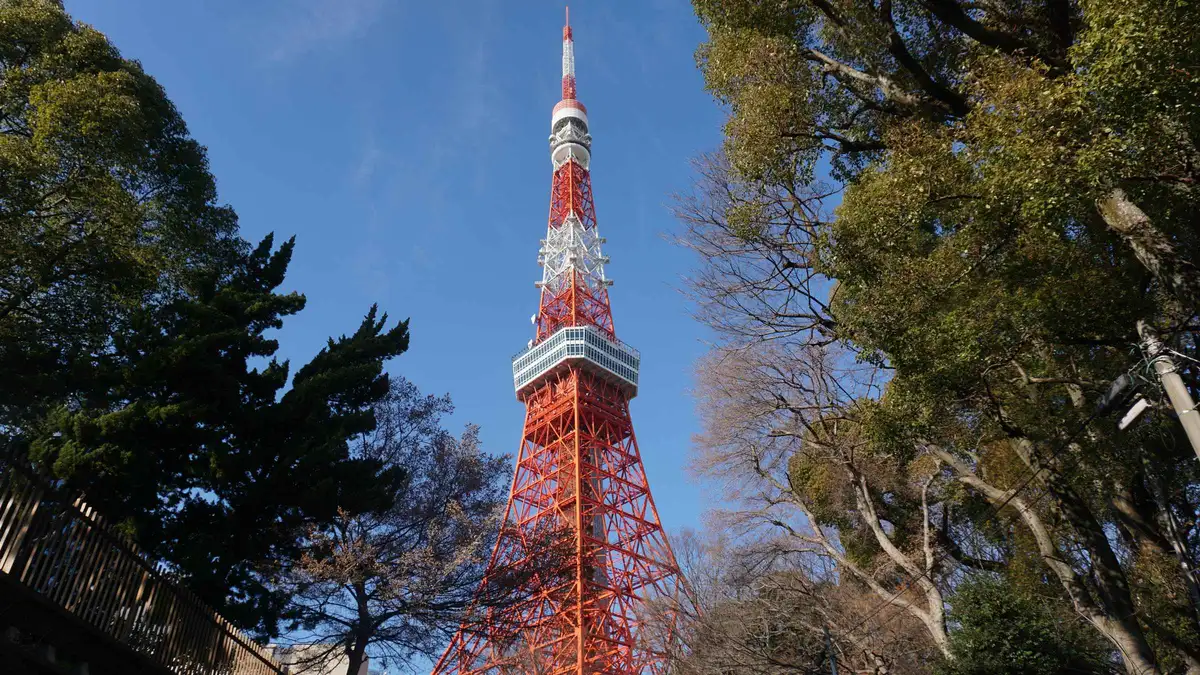
A 400-year-old temple gate with the 1958 steel tower directly behind it, five minutes from Akabanebashi. The tower is lit until midnight and holds detail while the sky is still blue. The tower session shoots the gate, Shiba Park and the tower base; the viewpoints walk adds Atago Shrine and leaves the camera with you.

How a Tokyo Photoshoot Works

Four beats, the same on every listing here. What changes is how much is agreed before you arrive, and how long the photographs take to reach you afterwards.

  1. Book

    Pick the session and the hour

    Neon needs full darkness, so book after sunset; the temple approach needs the opposite and rewards an eight o'clock start. Sessions run from fifteen minutes at the crossing to two and a half hours in the Asakusa studio.

  2. Before

    The operator messages you

    Five listings ask for WhatsApp specifically, and one of them treats fifteen minutes of unannounced lateness as a no-show. Another photographer contacts you the day before to fix the exact meeting time. This is also when you say what mood you want, which every listing asks for.

  3. Meet

    A named landmark, not your hotel

    The Starbucks at Shibuya Tsutaya, Don Quijote in Kabukicho, Yodobashi Camera's west store, the Hachiko statue, American Eagle at the crossing. Transport there is excluded on every listing that publishes exclusions, and one reviewer notes he paid his own fare between districts.

  4. After

    The gallery arrives — eventually

    48 hours is the fastest published promise, and one listing guarantees it. Two days on the Instax session, seven days on the cinematic shoot, nothing stated at all on four listings. One gallery expires after thirty days, so download it the day it lands.

Which Tokyo Photoshoot Should You Book?

All fourteen sessions on one screen, lined up on what differs. Prices move with dates and party size, and the live number is one click away on each row.

Session From Length Photos Best for Book
Shibuya neon tour $117 1 hr 35+ retouched, no date given The scramble crossing after dark Check Availability Details
Shinjuku midnight session $35 1 hr Edited files, count not stated The cheapest real photographer Check Availability Details
Shinjuku cyberpunk $85 1–1.5 hrs All usable frames in 48 hrs A guaranteed fast gallery Check Availability Details
Cinematic street shoot $233 1–1.5 hrs 80–150 edited, 15–20 retouched Editorial portraits for two Check Availability Details
Shinjuku with Instax prints $76 30–90 min 20 edited + 5 instant prints Something to take home that night Check Availability Details
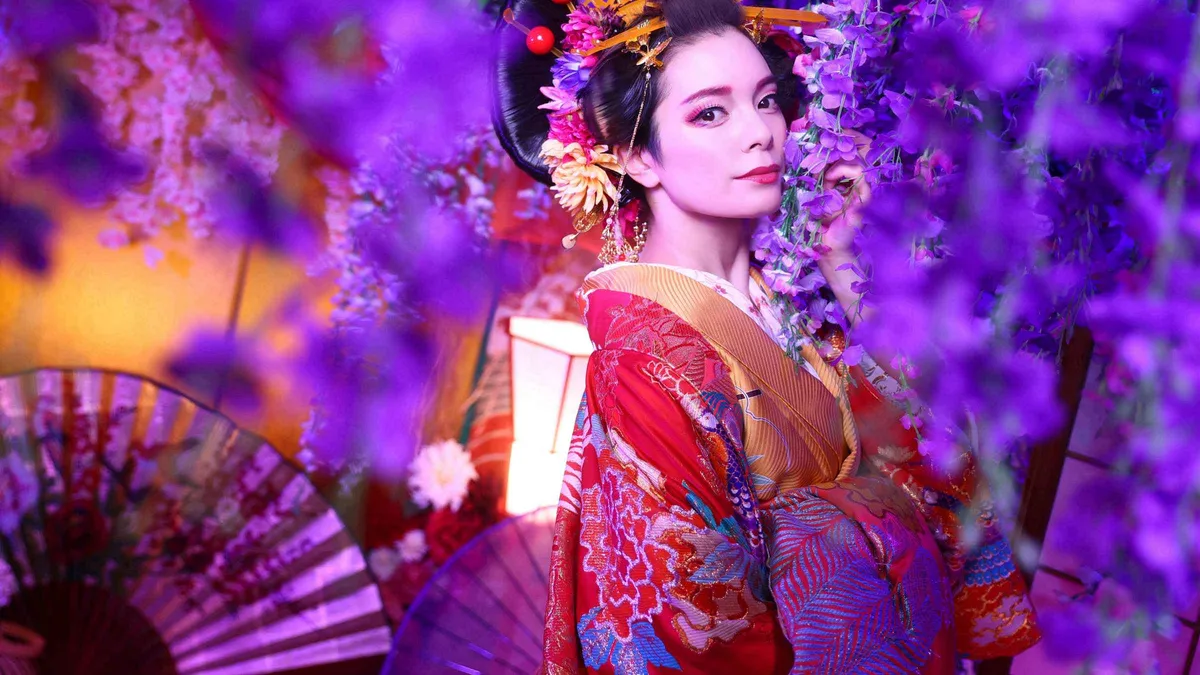
Kimono makeover studio $223 2.5 hrs All image data Hair, makeup and oiran costume Check Availability Details
Asakusa kimono walk $21 3 hrs Originals + retouched per booking Kimono on the street, cheaply Check Availability Details
Daytime portrait tour $80 1.5 hrs About 50 edited Two districts with commentary Check Availability Details
Shibuya Crossing session $134 15–45 min Package count not published A group of up to eight, fast Check Availability Details
Kabukicho neon hour $107 1 hr 35+ edited, 30-day expiry Godzilla head and back alleys Check Availability Details
Asakusa temple & river $91 30–90 min 20, 50 or 75 by package Families and proposals Check Availability Details
Portrait workshop $50 1.5 hrs Your own files Learning, with a model to shoot Check Availability Details
Tokyo Tower at Zōjō-ji $57 30–90 min 20–80 colour-corrected in 48 hrs The gate and tower in one frame Check Availability Details
Hidden tower viewpoints $55 2 hrs Your own files Three viewpoints plus Atago Shrine Check Availability Details

Every listing here carries free cancellation up to 24 hours before the start, and all of them let you reserve now and pay later.

What to Know Before You Book a Tokyo Photoshoot

Five things decide whether the session you book is the session you pictured: which product it actually is, what the cheap prices leave out, when the photographs arrive, where a camera is not welcome, and which month you are shooting in.

Three products share one word

Read the inclusions before the price. Eleven of these listings put a photographer behind the camera with you in front of it. Two do the opposite: the portrait workshop hires a model for you to photograph and asks you to bring a DSLR, mirrorless or film camera, and the hidden tower viewpoints walk is a guide showing you where to stand, with the camera staying in your hands.

And the Asakusa kimono listing is a rental first: its cheapest tier dresses you from a 33-piece collection and lists the one-hour photoshoot as an optional extra at checkout. All three kinds are worth booking for what they are; only eleven of them are portrait sessions.

What the $21 headline leaves out

On the kimono listing, your booked time is studio check-in, not the start of the shoot — allow roughly two hours for dressing and hair, so a 14:00 booking shoots around 16:00. Makeup is not included at all; you arrive with your own done. Retouched photos are allocated per booking rather than per person, so a family of four shares one allocation.

Everything must be back at the studio by 17:30. And the sizing note is real: adult kimono may not fit well under about 150 cm, with fewer options for women above roughly 175 cm or a 100 cm waist, and men above 185 cm or a 125 cm waist. None of that makes it a bad deal — it makes it a three-hour commitment rather than a one-hour one.

Ask when the photos arrive, not just how many

Delivery is the widest gap in this catalogue. The cyberpunk session guarantees the gallery inside 48 hours; the Shibuya Crossing and Asakusa sessions promise the same window; the Instax session says two days; the cinematic shoot says seven. Four listings state no delivery time whatsoever.

One adds a deadline at the other end: the Kabukicho hour keeps your photos in the cloud for thirty days. Counts vary just as widely — twenty edited images at the low end, 120 to 150 colour-graded with twenty fully retouched at the top. RAW files are excluded on every listing that mentions them, and prints are extra everywhere except the Instax board.

Where a camera is not welcome

Two of Shinjuku's most photographed lanes are private. Omoide Yokocho prohibits all photography and video without prior permission from the alley's management; approved shoots wear an armband and are chaperoned by staff. Golden Gai posts no-photo signs throughout and requires the business promotion association's approval, because its regulars come for the discretion — bar owners will ask you to leave.

Both appear as stops on listings here, so ask the operator how the stop is handled before you book it. Shinjuku Gyoen, the first location the concierge services name for Tokyo, bans commercial photography outright inside the garden, caps a group at ten people including models, allows hand-held equipment only, and bars tripods and reflectors entirely during cherry-blossom season. And since 1 October 2024 Shibuya ward has banned street drinking from 18:00 to 05:00 year-round around the station and Miyashita Park — warnings rather than fines, but it changes what an evening session looks like.

The month you pick changes the photograph

Tokyo's headline season is one week long. Somei Yoshino cherry blossoms hold full bloom for roughly seven days somewhere between late March and early April — the twenty-year averages are first bloom on 24 March and full bloom on 31 March — and a windy afternoon ends it early. Autumn is the opposite of what most visitors assume: ginkgo turns gold from late November, and central Tokyo's maples run red through December, often still holding after Christmas.

That is a month later than Kyoto. In between, June brings hydrangeas and the rainy season, and September and October are the wettest months of the year at 225 mm and 235 mm. The season chart puts the numbers against the months.

Rain, typhoons and what the operators actually promise

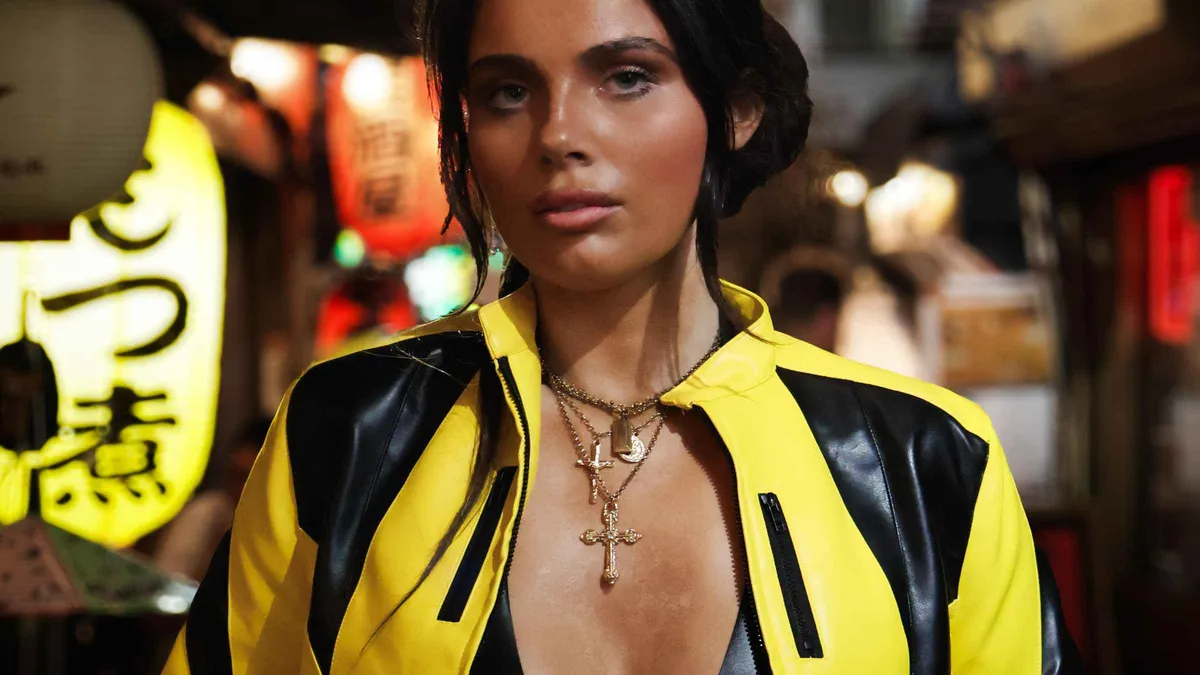
Only one listing publishes a real weather policy: the cinematic session offers a free reschedule or a full refund for a typhoon, an official Japan Meteorological Agency warning or major transport disruption, and states that light rain is not severe weather and the shoot proceeds. Two neon photographers go further and sell rain — wet asphalt reflects the signage, and reviewers on both listings describe shoots that went ahead in a downpour and came back better for it. Everywhere else, weather is not addressed, which in practice means free cancellation 24 hours ahead is your only lever.

If your dates are tight, book the neon session and let the rain happen.

Best Time of Year for a Tokyo Photoshoot

Tokyo shoots all year — the neon sessions happen after dark and barely notice the season. Outdoors is a different question. Bars show average monthly rainfall from the Japan Meteorological Agency's 1991–2020 normals, with the average daily high above each month.

  • Blossom season (March – May)
  • Rain and typhoons (June, September – October)
  • Heat (July – August)
  • Gold and red (November – December)
  • Cold, clear, bare (January – February)

The Somei Yoshino cherry blossom holds full bloom for about a week between late March and early April — twenty-year averages put first bloom on 24 March and full bloom on 31 March. Autumn colour peaks a month later than most visitors expect: ginkgo gold from late November, Japanese maples red through December. September and October carry the year's heaviest rain and the typhoon season.

Tokyo Photoshoot: Questions Travellers Ask

How much does a photographer cost in Tokyo?

A session where a professional photographs you starts at $35 for an hour in Shinjuku and mostly sits between $76 and $134 for an hour on the street; the cinematic option is $233 for a group of two. Concierge services ranking for this same search quote from $325 for thirty minutes. Below all of it, Asakusa kimono from $21 buys the garment, with the photoshoot as an add-on.

What are the most photogenic places in Tokyo?

For sessions on this page: Shibuya Scramble Crossing at blue hour, Kabukicho's neon strip and the Godzilla head after dark, the lantern alley of Omoide Yokocho, Golden Gai's painted signboards, Sensō-ji and Nakamise before eight in the morning, and the Sumida riverside with the Skytree behind it. The spot guide pairs each with its best light, the session that shoots it, and the access rule where one exists.

How much should you pay for a photoshoot?

Work it out per edited photograph rather than per hour. The Instax session is $76 for twenty edited images and five prints — under $4 a picture. The cyberpunk session is $85 for every usable frame, which starts at 35 for a solo guest. The cinematic shoot is $233 for 80–100 graded images with fifteen fully retouched, so you are paying for the retouching, not the count. Anything under $50 is either a shared group or a garment rental.

How many photos do you get, and how fast are they delivered?

From twenty to a hundred and fifty. The Asakusa session sells 20, 50 or 75 by package; the three neon sessions scale with group size from 35+ upward; the portrait tour gives about fifty; the cinematic shoot gives 80–150 colour-edited with 15–20 fully retouched. Delivery runs from a guaranteed 48 hours to seven days, with four listings promising no date at all — and one gallery that expires after thirty days.

Where can you legally take photos in Shinjuku's alleys?

Omoide Yokocho and Golden Gai both restrict it. The Omoide Yokocho management prohibits photography and video without prior permission, and approved shoots wear an armband with a staff chaperone; Golden Gai requires the business promotion association's approval and posts no-photo signs down every lane. The public streets of Kabukicho, the Shibuya crossing and Sensō-ji's approach carry no such restriction. Two sessions here list those alleys as stops — what to ask the operator.

What is the best time of year for a Tokyo photoshoot?

Late March to early April for the one week of Somei Yoshino cherry blossom, or late November through December for ginkgo gold and maples — Tokyo's autumn colour peaks a month later than Kyoto's. Avoid September and October if the shoot is outdoors: they are the wettest months at 225 mm and 235 mm and carry the typhoon season. Neon sessions are indifferent to all of it, since they run after dark and two of them prefer rain. The season chart has the month-by-month numbers.

Do you need to speak Japanese, or bring anything?

No — every listing here is guided in English, and several add Japanese, Chinese or Traditional Chinese. Bring the outfit you want to be photographed in: the neon photographers ask for dark or stylish clothing because it reads against the signage, and one asks for rain gear. Only the workshop requires equipment — a DSLR, mirrorless or film camera of your own.

Can you book a Tokyo photoshoot for a proposal or a family?

Yes, and one listing is built for it: the Asakusa temple session includes a pre-shoot consultation, timing guidance and discreet capture of the moment, and it is priced per group of up to twenty, which also makes it the cheapest way to photograph a large family. The Shibuya Crossing session takes a group of up to eight in fifteen to forty-five minutes, and the cinematic shoot is priced for two.

Cherry blossom week and the December maples are the two dates that sell out first — check live availability before you fix the rest of the trip.

Check Availability
Tours from $21 Check Availability